Stress Awareness Month: An opportunity to create healthy habits
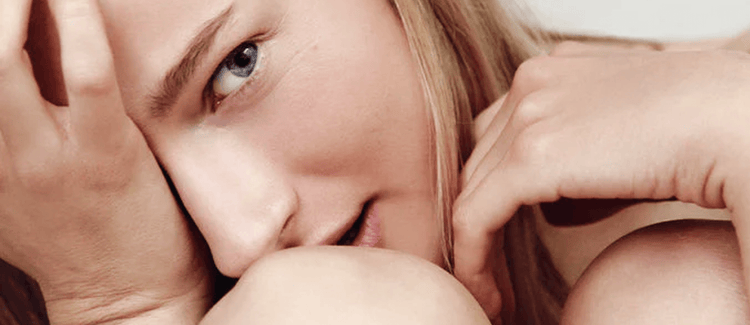
Every April since 1992, Stress Awareness Month has been held to invite health care professionals and health promotion experts around the globe to increase public awareness about both the causes and cures for stress.
The American Institute of Stress states that there is no unanimous definition of stress, however the most common is “physical, mental, or emotional strain or tension”. They also identify four key types of stress: acute stress, otherwise known as the fight-or-flight response; persistent and health-harming chronic stress; eustress, caused by daily life occurrences associated with elation; and distress, brought on by negatively-perceived life events.
Fascinatingly, The AIS explains, that “during both eustress and distress, the body undergoes virtually the same non-specific responses to the various positive or negative stimuli acting upon it. However, eustress causes much less damage than distress. This demonstrates conclusively that it is how an individual accepts stress that determines ultimately whether the person can adapt successfully to change.”
Kelly Gores has explored this notion extensively as the director of documentary Heal (popularized through Netflix) and author of the eponymous book, during which she investigates the body’s ability to heal itself through our thoughts, beliefs and emotions. On the current shift in our lifestyles, she brings focus to the opportunity we have, writing for Thrive, “When we slow down and practice the habit of just being with ourselves and our feelings, we begin to become self-aware. When we allow ourselves to feel the feelings, we can release and move energy that may have been trapped or stagnant for decades.”
Breathwork coach Artur Paulins agrees, “We’re usually locked into these dopamine loops of being able to get something nice to eat or going to see a movie with friends if we need a quick boost, whereas now we’re feeling exposed as we don’t have access to our usual hits. We don’t have distractions or the chance to escape and not think about stress. We have to sit with it and face it.” Artur was one of the first international teachers and instructors trained by Wim Hof—aptly known as ‘The Iceman’—the Dutch extreme athlete famed for his ability to withstand freezing temperatures, and world-record holder for a barefoot half-marathon on ice and snow. If there was ever a case for mind over matter, Wim Hof would be it.
Reiterating that stress’s definitions are manifold, Artur elaborates “Stress is also positive; exercise or fasting are examples of eustress, which in a reasonable dose with time leads to adaptation. Stress is also how vaccines work—by introducing pathogens into the body that then lead to adaptation. Thinking of stress this way allows us to build our resilience and ability to handle it while understanding and managing our stress response.”
Artur explains that breath is a cue that gives us an indication of how we’re feeling that we otherwise might not notice: “If we have awareness of our breath, we can catch the state shift early enough to address it.” During these times when we feel out of control and so much is uncertain, it’s reassuring to know that something so innately habitual as breathing can influence our outlook. Incorporating his knowledge of breathwork with the core techniques of meditation, he teaches clients to develop interoception, which is our ability to notice internal sensations such as stress or lethargy. His online course One Breath advises people to notice one natural breath from the beginning of inhalation to the end of exhalation, encouraging clients to keep a tally throughout the day to create one-breath micro-meditations that help to ground them in the present and prevent anxiety around the future.
 Artur Paulins
Artur himself found interest in breathwork from his training in Jiu-Jitsu, but also incorporates yoga to his fitness routine, finding relief through the exhaustion of the former while enjoying the grounding benefits of the latter. In the management of stress, he believes everyone could benefit from the balance of both intense and low-impact exercise as a preventative measure as “exercise like HIIT can be a quick way to keep yourself in shape, but sometimes it can be too much if you’re already functioning at a high intensity in terms of work or your relationships.”
To add to his repertoire of breathwork and fitness expertise, Artur teaches the benefits he found in cold exposure from the Wim Hof Method. “The initial interest was to learn something seemingly impossible, that’s supposedly out of our reach. I was always looking for ways to improve my performance in martial arts as I was working full-time in an architecture practice and training five or six times a week. I didn’t have any balance so I was breaking down my body until I got injured dislocating my knee. Within a week, I changed the way I perceived things with breathwork and the mental health benefits made me want to explore cold therapy further.”
Artur explains that when you undergo cold exposure, your body goes into the fight-or-flight response, producing norepinephrine, a stress hormone and neurotransmitter that is linked to vigilance, alertness and energy, and also improves symptoms of depression. “It’s a safe tool to use as a stress response, and trains you to overcome what your body initially perceives to be challenging.”
So how do we implement this at home? “Start the day with your usual warm shower, then end by rinsing your legs then arms with cold water for the first week. In the second week, you can incorporate your torso. Slowly over time, you can create a habit that will give you the benefits with the least amount of suffering,” Artur recommends. “Beyond it being a mental training tool to give you the ability to calm down in a stressful situation, it also improves cardiovascular function, and increases your white blood cell count which is vital for immunity.”
Aside from cold showers, he recommends managing stress at home with a daily check-in. If you feel stressed, you can practise a simple exercise known as square breathing, where you inhale for a count of four, hold for four, exhale for four and hold for four—“You can even do this on your daily walk, using your steps to help you count.” Breathwork can also be used to help relax or fall asleep: “Focus on prolonged, calm exhalation, for example inhaling for a count of three and exhale for a count of six.”
Catch Artur’s daily Instagram Live 15-minute breathwork sessions at 9am GMT here and discover our supplement range designed to alleviate the symptoms of stress here.